
FancyAI Skills Explained: The Complete Guide to AI Experts, Features, GEO, and AI Readiness

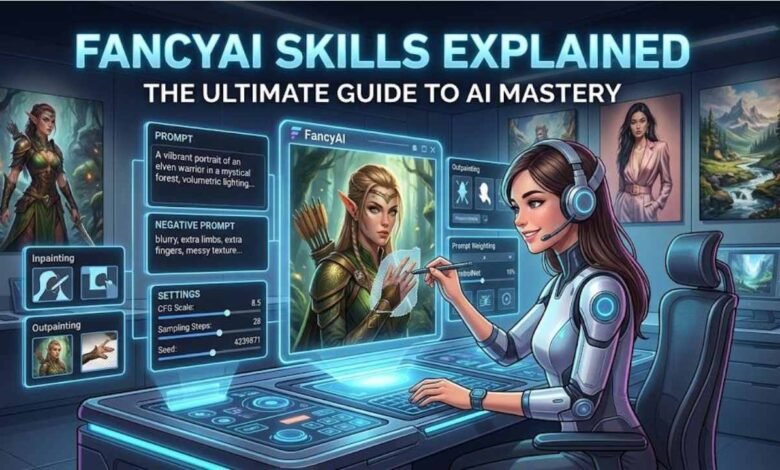
“FancyAI” refers to a family of related products and services. This article focuses on FancyAI’s GEO and AI-visibility capabilities (often described as the AI discovery and execution layer for brands), while AI Experts and other enterprise or creative features may belong to the broader FancyAI ecosystem or related FancyAI products. Where features overlap across these offerings, the emphasis here is on how they support AI citations, AI Readiness, and GEO outcomes rather than on any single product’s full feature set.
What Are FancyAI Skills?
“FancyAI skills” refers to the specialized capabilities built into the FancyAI platform that turn AI from a one-off content tool into an execution layer for AI discovery. Instead of only generating text or images, FancyAI skills focus on the work that makes a brand visible and citable inside AI engines: technical optimization, content structured for citations, authority signals, and agentic social engagement.
For anyone searching for FancyAI Skills Explained, the key idea is that these capabilities combine AI execution, GEO, technical optimization, and business workflows rather than focusing on content generation alone.
In practice, FancyAI skills include:
- AI Experts: pre-built, task-specific AI agents for marketing, design, and content workflows.
- GEO execution: structured content and technical work designed to earn citations in AI answers.
- AI Readiness Index: a scoring system that measures how “ready” a site is to be understood and cited by AI models.
- Enterprise workflow integrations: connections to CRM, ERP, DAM, ad platforms, and local files so business data drives AI tasks.
These skills are not just about producing more content. They are about producing the right kind of content, in the right structure, with the right technical signals, so AI systems can more easily interpret, extract, and potentially cite it.
The Core FancyAI Skills Breakdown
1) AI Experts: Specialized Agents for Real Tasks
FancyAI’s AI Experts are specialized AI agents designed to perform specific creative and marketing tasks, such as fashion photography, product animation, editorial design, and campaign asset creation. Each Expert can be called via its own API endpoint, letting teams mix and match capabilities instead of being locked into a single monolithic tool.
Typical use cases include:
- Turning product data from an ERP into spec pages, visuals, and launch content.
- Analyzing CRM data to spot churn signals and draft personalized reactivation campaigns.
- Using ad performance data to iterate creatives and extend high-performing concepts.
- Tracking social trends and generating on-brand copy, visuals, and content plans.
For marketing and design teams, this means FancyAI skills move beyond “write me a post” to “connect to our systems, read our data, and execute the next step in the workflow.”
2) GEO Execution: Technical Optimization + Citation-Ready Content
FancyAI positions itself as the execution layer for AI discovery, showing brands where they stand across major LLMs and then doing the work required to improve those outcomes. That work is Generative Engine Optimization (GEO): structuring content and technical assets so AI engines cite a brand as an authoritative source.
For readers looking for FancyAI Skills Explained, GEO is one of the most important parts to understand because it connects technical optimization, content structure, and AI visibility.
Key parts of GEO execution in FancyAI skills include:
- Technical optimization: ensuring AI crawlers (GPTBot, ClaudeBot, PerplexityBot, etc.) can access and render content correctly.
- Content execution: creating pages with clear definitions, direct answers, comparisons, and evidence that AI models prefer to quote.
- Citation development: building authoritative proof through case studies, original data, and third-party mentions that increase trust.
- Authority building: strengthening entity signals and structured data so AI systems understand who the brand is and what it does.
Case data from FancyAI’s early customers shows that some GEO work can produce measurable movement within a 30–90 day window. In one example, a specialty retailer jumped 99 positions on Google for a core keyword while also reaching top-3 AI recommendations across four major LLMs.
3) AI Readiness Index: Entity Clarity, Structured Proof, Citation Density
FancyAI uses an AI Readiness Index to quantify how well a site is set up to be cited by AI models. The index looks at factors such as:
- Entity clarity: do metadata, schema, and on-page copy agree on who the organization is and what it offers?
- Structured proof: are facts backed by specific examples, case studies, and verifiable data instead of vague claims?
- Citation density and corroborating mentions: how often and how consistently the brand appears across trusted sources AI models rely on.
Improving these signals makes it easier for AI systems to extract clean answers and attribute them to the brand. FancyAI’s data suggests that fixing “plumbing” issues—like crawler access, rendering, and schema—can lift AI visibility quickly, even before large content programs mature.
4) Agentic Social Engagement and Authority Signals
AI models do not just read a brand’s own site. They also weigh signals from social platforms, communities, and third-party content. FancyAI skills include agentic social engagement, which helps brands identify and participate in conversations that influence how AI engines recommend them.
This matters because research shows a large share of AI citations comes from individual profiles and original content, not just corporate pages. By coordinating employee amplification, expert commentary, and targeted community participation, brands can increase the likelihood that AI systems see them as active, credible sources.
How FancyAI Skills Fit Into Marketing and SEO
FancyAI Skills Explained is not just a feature list; it is a shift in how marketing budgets and workflows are organized. Traditionally, SEO and “AI visibility” are treated as separate projects with separate vendors. FancyAI’s early data suggests GEO work can deliver many of the same ranking benefits as SEO while also winning recommendations in AI answers that SEO alone cannot reach.
Practical implications:
- GEO content can act as an accelerant for SEO, not a replacement.
- Brands may be paying twice for overlapping work if SEO and GEO sit in completely separate silos.
- AI-referred visitors often convert at higher rates, making “traffic” a misleading KPI if it ignores quality and intent.
For content writers, SEOs, and growth teams, FancyAI skills offer a way to align traditional search goals with the emerging AI discovery layer.
Who Should Use FancyAI Skills?
FancyAI skills are most useful for:
- Enterprise marketing teams that need AI visibility across multiple engines and markets.
- E-commerce and retail brands that want product data from ERPs to drive spec pages, visuals, and launch content.
- B2B and SaaS companies that rely on authoritative content, case studies, and technical documentation to win trust.
- Agencies and in-house SEO teams exploring GEO as a complement to existing search programs.
If your customers are already asking AI assistants “who should I buy from,” “what is the best tool for X,” or “how do I solve Y,” then FancyAI skills are directly relevant to your growth strategy.
Common Mistakes When Implementing FancyAI-Style Skills
Even with a strong platform, teams often stumble on execution. Common mistakes include:
- Focusing only on content volume instead of structure and entity clarity.
- Ignoring technical readiness: blocking AI crawlers by accident, poor rendering, or missing schema.
- Treating AI visibility as a branding metric instead of a revenue metric (e.g., tracking mentions instead of recommendation rank and conversion).
- Assuming GEO always requires 7–12 months to show results, even though some FancyAI customer cases have reported measurable movement within 30–90 days.
FancyAI Skills Explained properly means understanding that the biggest gains often come from fixing fundamentals first, then layering on targeted content and authority work.
Getting Started With FancyAI Skills
For teams evaluating FancyAI or similar GEO platforms, a practical starting point is:
- Run an AI readiness audit to identify crawler access, schema, and entity issues.
- Pick 3–5 high-value queries where AI already gives answers and map them to existing or planned pages.
- Rewrite those pages to lead with clear definitions, direct answers, and structured comparisons.
- Add authoritative proof: case studies, specific numbers, and named examples that AI can cite.
- Track both Google rankings and AI recommendation positions to measure real business impact.
This approach aligns with how FancyAI skills are designed to work: diagnose, optimize, execute, and measure across both traditional search and AI discovery.
Why FancyAI Skills Explained Matters Now
Search behavior is shifting. More users are starting their research in AI assistants instead of scrolling blue links. Brands that optimize only for classic SEO risk being invisible at the moment many buyers form their shortlist.
FancyAI Skills Explained gives marketers a framework to:
- Understand how AI models evaluate and cite sources.
- Build content and technical foundations that AI systems can trust.
- Connect AI work to real outcomes: rankings, recommendations, and revenue.
In that sense, FancyAI skills are less about a single tool and more about a new operating model for discovery in an AI-first world.
Also Read: Sunseeker Holiday Homes Administration: Causes, Impact & Updates
FAQ
What exactly are FancyAI skills?
FancyAI skills are the specialized capabilities inside the FancyAI platform that help brands get discovered and cited in AI answers. They include AI Experts for task-specific work, GEO execution for citation-ready content and technical optimization, an AI Readiness Index to measure readiness, and integrations that let business data drive AI workflows.
How is FancyAI different from standard SEO tools?
Standard SEO tools focus on ranking in traditional search results. FancyAI focuses on the AI discovery layer: helping AI engines access, understand, and potentially recommend a brand in conversational answers. Early data suggests GEO work can also improve Google rankings, but the primary goal is visibility inside AI assistants.
Do I need to replace my SEO program to use FancyAI skills?
No. FancyAI’s position is that GEO is an accelerant for SEO, not a replacement. Many teams run both in parallel, using GEO to strengthen entity signals, content structure, and authority—signals that also matter for search rankings.
What kinds of businesses benefit most from FancyAI skills?
E-commerce and retail brands, B2B and SaaS companies, and any business whose customers use AI assistants to research products and vendors tend to benefit most. Organizations with existing content, case studies, and technical documentation can often see faster results once those assets are structured for AI.
How quickly can brands see results from GEO work?
FancyAI’s early customer data shows measurable movement in some cases within 30–90 days, rather than suggesting that every GEO program will require 7–12 months. Quick wins often come from fixing technical readiness (crawler access, rendering, schema) before large-scale content programs fully mature.
Can FancyAI skills integrate with our existing tools and data?
Yes. FancyAI is designed to connect to CRM, ERP, DAM, ad platforms, social channels, and local files so that real business data drives AI tasks. AI Experts can be called via separate API endpoints, allowing teams to plug specific capabilities into existing workflows.





2 Comments