
Visionics Explained: The Remarkable Technology, Software, Services and Company History

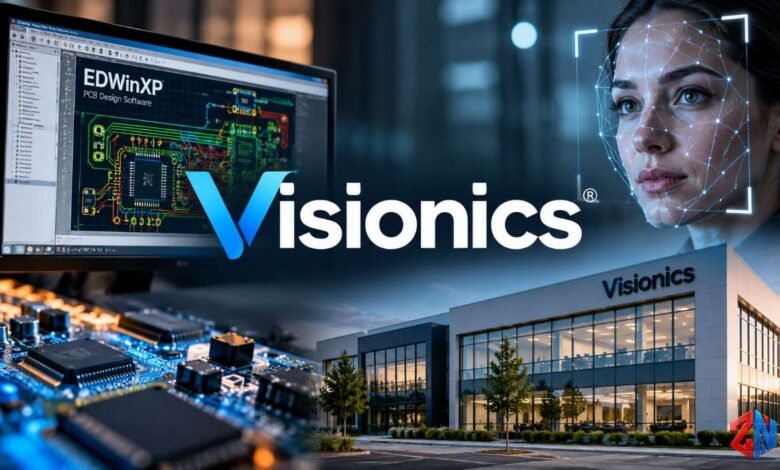
Visionics is a name associated with several technology businesses, rather than one company offering every product mentioned online. Depending on the context, it can refer to electronic design software, a UK engineering services business, an Australian photonics consultancy, or a historical biometric technology company.
That distinction matters. Someone looking for PCB design software needs different information from a reader researching facial recognition. Mixing these businesses together can lead to incorrect assumptions about their products, ownership and history.
This guide explains the main uses of the name, how the associated technologies work, and what to check before downloading software or contacting a supplier.
What Is Visionics?
The clearest way to understand the name is to pair it with a product, location or industry. A reference to EDWinXP points towards electronics design. FaceIt and Identix point towards biometric identification history.
The following comparison separates several important contexts:
| Name or context | Associated field | Useful identifying detail |
|---|---|---|
| Visionics Sweden | Electronic design automation | Historical association with EDWin and EDWinXP |
| Visionics Limited, UK | Electronic engineering services | PCB, hybrid circuit, ASIC and FPGA design |
| Visionics Corporation | Biometric identification | FaceIt technology and the 2002 Identix merger |
| Visionics, Australia | Photonics and industrial engineering | Company-described laser integration, sensing and measurement services |
These distinctions are supported by product documentation, the UK business’s website, the Australian company’s own profile and historical regulatory filings. A shared name alone does not establish shared ownership or a single corporate history.
When checking a search result, read beyond the headline. The product name and business location often reveal more than the company name itself.
Visionics and Electronic Design Software
One established association is electronic design automation, usually shortened to EDA. This describes software that helps engineers develop electronic circuits and prepare designs for production.
The official EDWinXP company history traces the Swedish business’s EDA work to CAD ABC in 1983. It also describes earlier products including CAD 1000, Comp CAD and the EE Designer series. These belong to the electronics software history of the name.
What Does EDWinXP Do?
EDWinXP brings several electronics design tasks into one software environment. Its documented workflow includes drawing a circuit, simulating its behaviour, arranging a printed circuit board and preparing manufacturing documentation.
The official manual identifies five main areas: schematic editing, layout editing, fabrication, simulation and component libraries. It also explains that design information can pass between the schematic and PCB layout through an integrated database.
For a beginner, the distinction is straightforward. A schematic explains how components connect electrically. A PCB layout shows where those components sit physically and how conductive tracks connect them on the board.
Keeping those views coordinated helps a designer manage changes without treating every stage as an unrelated drawing.
How Circuit Simulation Helps
The software documentation describes a Mixed Mode Simulator and an EDSpice simulator. Mixed-mode simulation covers analogue and digital circuitry, while EDSpice provides SPICE-based circuit analysis. The documentation also describes EDSpice as a separate product and plug-in extension, so users should confirm its availability under their chosen licence.
For example, an engineer developing a small sensor circuit might examine how its output changes when an input varies. This can reveal problems before the first physical board is produced.
However, a simulation represents a model. Its usefulness depends on the component models and assumptions supplied. Physical testing remains necessary to establish how the finished circuit behaves in its actual environment.
Preparing Manufacturing Files
Once the layout is ready, manufacturing equipment needs usable design data. EDWinXP’s Fabrication Manager documentation lists Gerber artwork output, Excellon drill data and assembly-related outputs.
These files serve different purposes. Board artwork describes layers, while drill data identifies the holes required. Assembly information helps communicate how components should be fitted.
A useful handover therefore involves more than exporting a file. The designer should confirm that the manufacturer accepts the chosen formats and that the exported information matches the intended board.
What Changed in EDWin’s Ownership?
An important detail appears in the official product history: EDWin passed to DCT Co., Ltd. at the end of 2019. The website describes DCT as a Chinese-German joint venture working with laser material processing, PCB prototyping equipment and related software.
The current product homepage also states that EDWinXP belongs to the DCT family and directs licence questions to its support contact. This means older descriptions connecting the software with Visionics should be read alongside the later ownership information.
For existing users, the practical question is who can support their particular installation. Before renewing a licence or moving an older project, confirm the applicable product version, activation arrangements and support contact.
A product’s historical developer and its present licensing organisation are not always the same.
What Does Visionics Limited in the UK Offer?
The UK business’s website lists printed circuit board design, image processing software, hybrid circuit design, and ASIC and FPGA circuit design. Its contact page identifies a Rushden, Northamptonshire address.
These service categories point towards engineering project work. However, a short service list does not explain project availability, delivery times or the exact scope of a proposed engagement.
A prospective customer should prepare a clear brief covering:
- The device’s purpose and operating environment.
- Existing drawings, prototypes or technical requirements.
- Required design files and documentation.
- Testing responsibilities and acceptance criteria.
- Expected support after delivery.
This makes an enquiry more useful than simply asking whether a supplier “does electronics.” It also helps establish which parts of the development process the supplier would actually handle.
Visionics Corporation and Facial Recognition
A separate historical context concerns Visionics Corporation and biometric identification. Its FaceIt technology was associated with facial recognition applications.
Identix’s regulatory filings confirm that its merger with the company was completed on 25 June 2002. Consequently, descriptions of that business need to distinguish its earlier identity from the combined organisation’s later activities.
What Was FaceIt?
Identix’s 2002 annual report describes FaceIt as a facial recognition software engine supplied through development tools, licences and applications. It distinguished between verification tools and identification tools.
Verification asks whether a face matches a particular claimed identity. Identification searches across a collection of identities for a possible match.
For example, comparing someone with their own enrolled photograph is a verification task. Searching a photograph database for potential matches is an identification task. These are different uses, even though both involve facial recognition.
Historical descriptions of FaceIt should not be treated as specifications for a product available today. They explain what the technology offered at that point in the company’s history.
The Australian Photonics Business
The Australian business using the name describes itself as an engineering and technology consultancy focused on photonics, laser-based manufacturing and advanced sensing.
Its LinkedIn company profile lists laser marking systems, measurement, process monitoring and upgrades to older industrial laser equipment among its capabilities.
Photonics concerns the use of light in technology. In an industrial setting, that can involve using lasers to mark materials or optical sensors to monitor a process.
For a potential customer, the useful starting point is the manufacturing problem: what material needs marking, what measurement is required, or which production step needs improvement. That gives a specialist something concrete to assess.
What to Check Before Using the Software
Finding an official product page is only the beginning of evaluating an engineering tool. Documentation may cover several generations of a product, so each claim should be matched to the version being considered.
Operating System Compatibility
The published EDWinXP requirements page lists Windows versions through Windows 10 and includes older hardware and browser requirements. That page alone does not confirm compatibility with every newer operating system or workstation configuration.
Ask about your exact setup, including installation permissions and licence activation. If evaluating an older project, test a copy rather than making the only working file your first experiment.
Licensing and Evaluation Terms
The product homepage advertises 14-day evaluation periods for EDWinXP and EDWinNET. Before downloading, confirm that the available installer, trial conditions and required modules match your intended task.
A successful evaluation should reproduce a small but representative workflow. Opening the application is less informative than creating a circuit, checking it and producing the output you actually need.
File Compatibility and Handover
If your project involves another engineer or manufacturer, establish the required deliverables early. Ask whether they need editable project files, manufacturing outputs, a component list or supporting drawings.
This avoids discovering at the end that the design looks correct on screen but cannot be transferred in the form your collaborator expects.
How to Find the Right Company or Product
Use a specific search phrase that reflects your task:
| Your goal | More useful search phrase |
|---|---|
| Find circuit design software | Visionics EDWinXP software |
| Locate product instructions | EDWinXP official manuals |
| Investigate UK engineering services | Visionics Limited UK PCB design |
| Research biometric history | Visionics Corporation Identix merger |
| Explore Australian industrial services | Visionics Australia photonics |
Then compare the result’s location, product names and contact information. For historical questions, check the document date. For purchases or support, establish whether the information still applies to the current product.
This approach reduces the risk of sending an enquiry to the wrong organisation or confusing an archived product description with a current offer.
Conclusion
Understanding Visionics starts with identifying the context. Its associations include electronic design software, UK engineering services, industrial photonics and a historical facial recognition business.
For software users, EDWinXP’s documentation and ownership history are especially relevant. For business enquiries, the service scope and location matter most. For biometric research, dated corporate filings provide the clearest foundation.
Also Read: Jacomo Corbo: From Formula 1 Strategist to PhysicsX AI Leader
Frequently Asked Questions
What is Visionics used for?
The answer depends on the business or product. Associated activities include electronic circuit design, PCB development, engineering services, industrial photonics and historical biometric identification.
Is Visionics the same as EDWinXP?
No. EDWinXP is an electronic design software product historically associated with Visionics. Its official history states that EDWin passed to DCT at the end of 2019.
What happened to Visionics Corporation?
The biometric technology company merged with Identix. Regulatory filings record completion of the merger on 25 June 2002. This history should be distinguished from other businesses using the name.
Does Visionics provide PCB design services?
The UK company’s website lists PCB design among its services. EDWinXP, associated with the name’s software history, also provides tools for PCB development. Confirm whether you need a design service or software.
Is EDWinXP free to use?
The official homepage advertises a 14-day evaluation. That does not establish that the full product is permanently free. Confirm current licence terms, included features and activation requirements before relying on it.





2 Comments