
AI Influencer: How Digital Characters Grow an Audience & Make Money

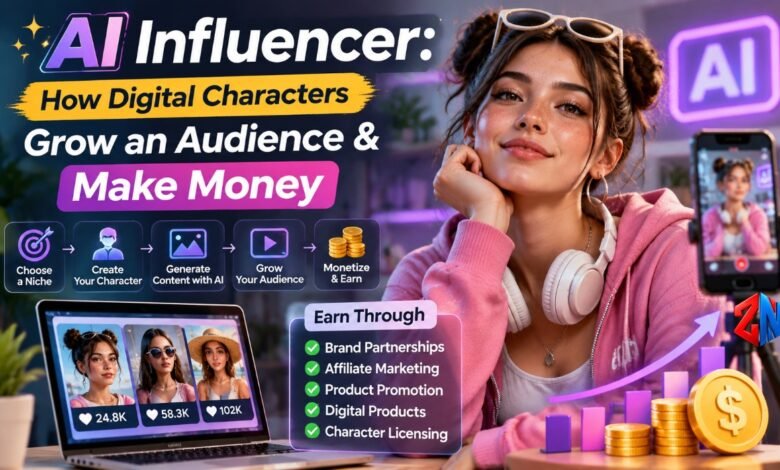
An AI influencer is a computer-generated personality that builds an audience, publishes social media content, interacts with followers, and promotes products just like a traditional influencer. The difference is that its appearance, voice, personality, and content are created or managed using artificial intelligence and digital production tools.
From realistic virtual models on Instagram to animated brand ambassadors on TikTok, AI influencers are changing how creators and businesses approach digital marketing.
What makes this trend interesting is that you no longer need to appear in front of a camera to build an influencer brand. You can develop a fictional character, create consistent photos and videos, establish a recognizable personality, and potentially generate revenue through brand partnerships.
But creating an attractive digital character is only the beginning. Successful AI influencers also need a clear identity, valuable content, audience engagement, and credibility.
This guide explains what AI influencers are, how they work, popular virtual influencer examples, how to create one, and the different ways they can generate income.
What Is an AI Influencer?
An AI influencer is a fictional digital personality designed to behave like a social media creator. It can have a name, appearance, personality, interests, background story, and recognizable communication style.
Unlike traditional influencers, AI influencers do not need to exist as physical people. Their visual content and interactions can be produced using artificial intelligence, computer-generated imagery (CGI), animation, and other digital technologies.
For example, an AI fashion influencer might publish outfit inspiration, attend virtual fashion events, promote clothing brands, and share lifestyle content.
An AI fitness influencer might create workout demonstrations, explain exercise routines, and promote fitness products.
The important distinction is that an AI influencer is more than a single AI-generated photograph. It is an ongoing digital identity built around consistent content and audience relationships.
AI Influencers vs. Virtual Influencers vs. Human Influencers
These terms are related, but they are not identical.
| Type | How it works |
|---|---|
| AI influencer | Uses AI to create or manage a fictional social media personality. |
| Virtual influencer | A digitally created character, often produced using CGI, animation, or AI. |
| Human influencer | A real person who creates content and builds an audience. |
| AI-assisted influencer | A real person who uses AI tools to improve content creation. |
A virtual influencer does not necessarily use generative AI. Some established digital personalities existed long before modern AI image generators became widely available.
Similarly, a human creator using AI to edit photographs does not automatically become an AI influencer.
Understanding this distinction helps brands and creators choose the right approach.
Popular Virtual Influencer Examples
Several virtual personalities demonstrate how digital characters can develop recognizable identities and attract commercial opportunities.
1. Lil Miquela
Lil Miquela is one of the best-known virtual influencers. Introduced on Instagram in 2016, she became recognized for fashion content, music, digital storytelling, and partnerships with major brands. Her development demonstrates how a fictional personality can become an established entertainment and marketing identity.
2. Aitana López
Aitana López is a virtual model developed by the Spanish agency The Clueless. Her realistic appearance and social media presence demonstrate how AI-generated personalities can be developed for fashion and commercial campaigns.
3. Lu do Magalu
Lu first appeared in 2003 as Tia Luiza, a 2D mascot created to help customers shop online. The character later became known as Lu do Magalu and evolved into a major social media personality, representing Brazilian retailer Magazine Luiza across digital platforms.
These examples also reveal an important lesson: a successful virtual personality needs more than an attractive appearance. A recognizable identity, consistent storytelling, and a clear purpose help audiences remember and follow the character.
It is also important to understand that these examples do not all use the same technology. Some virtual influencers were developed using CGI and digital production techniques, while others, such as Aitana López, are associated with generative AI.
How Do AI Influencers Work?
AI influencers combine several technologies to produce content that resembles the work of human social media creators.
The process generally involves five elements:
- AI image generation: Creates the character’s appearance, clothing, expressions, and surroundings.
- Character consistency: Reference images and character models help maintain the same appearance across different posts.
- AI video generation: Converts images or text prompts into short videos and animated scenes.
- AI voice generation: Creates synthetic speech, narration, and dialogue.
- Content management: Human operators plan posts, review generated content, publish updates, and respond to audience activity.
For example, imagine a virtual travel influencer who regularly shares content about different destinations.
An operator can create the character’s original appearance, generate images of the character visiting different locations, produce short travel videos, add narration, and publish everything through a social media account.
The character appears to have an ongoing digital life, but the underlying operation is usually managed by real people.
This distinction matters because AI influencers are not necessarily autonomous. A human creator, marketing team, or agency generally controls their strategy and commercial activities.
Why Are AI Influencers Becoming Popular?
AI-powered personalities offer several advantages for creators and businesses.
1. Greater Creative Control
Brands can establish a character’s appearance, communication style, personality, and visual identity.
This makes it easier to maintain a consistent brand image across campaigns.
2. Flexible Content Production
Traditional influencer campaigns may require photography sessions, travel arrangements, filming schedules, and multiple revisions.
Virtual personalities can reduce some of these production requirements because their content can be created digitally.
3. Global Audience Opportunities
AI-generated content can be adapted into different languages and visual styles.
A virtual influencer can publish localized content for different audiences without necessarily organizing separate physical shoots.
4. Long-Term Brand Identity
Businesses can develop their own digital ambassadors rather than depending entirely on external creators.
Lu do Magalu demonstrates this approach: a character originally created to support online shopping eventually became a recognizable brand personality.
5. Experimentation With New Content Formats
AI makes it easier to experiment with storytelling, animation, virtual environments, and creative product demonstrations.
However, popularity does not automatically translate into better marketing performance. A 2026 meta-analysis published in the Journal of the Academy of Marketing Science, based on 210 independent experimental studies and 643 effect sizes, found that virtual influencers tend to generate greater novelty but lower credibility than human influencers. Their effectiveness also depends on factors such as character design and campaign context.
In other words, being different can attract attention, but earning trust still requires work.
How to Create an AI Influencer Step by Step
Creating an AI influencer does not require advanced programming skills. However, a structured approach can help you avoid common production problems.
Step 1: Choose a Profitable Niche
Start by deciding what your AI influencer will be known for.
Popular niches include:
- Fashion and beauty
- Fitness and wellness
- Travel and lifestyle
- Food and cooking
- Technology and gadgets
- Gaming and entertainment
- Education and personal development
Avoid choosing a niche simply because it is popular.
Consider whether you can consistently produce interesting content for that audience and whether relevant businesses have products or services to promote.
For example, a virtual fashion creator could focus on affordable everyday outfits rather than covering every fashion trend.
A specific positioning makes the character easier to recognize.
Step 2: Develop the Character’s Identity
Before generating images, create a character profile.
Decide on:
- Name and fictional background
- Appearance and distinctive features
- Personality and communication style
- Interests and hobbies
- Target audience
- Content themes
- Visual aesthetic
For example, you could develop a fictional travel personality who enjoys exploring local cafés, discovering hidden destinations, and sharing practical travel recommendations.
Give the character recognizable visual details, such as a particular hairstyle, clothing style, or color palette.
These details help establish continuity across social media posts.
Step 3: Generate Consistent AI Images
Next, create the character’s initial appearance using an AI image-generation tool or AI influencer generator.
Examples of tools include:
- Midjourney
- FLUX
- Adobe Firefly
Start with a collection of reference images showing different expressions, poses, outfits, and camera angles.
The most important objective is visual consistency.
If your influencer has different facial features in every photograph, followers may struggle to recognize the character.
Use consistent character references, supported identity-preservation features, or a trained character model where appropriate.
Always check the commercial-use terms of your chosen tools and obtain permission before using another person’s likeness.
Step 4: Create AI Videos and Voiceovers
Static photographs are useful, but videos provide additional storytelling opportunities.
You can use video-generation platforms such as Runway and Kling AI to create animated scenes and short-form content.
For voiceovers, tools such as ElevenLabs can generate synthetic speech.
Your character could introduce a product, explain a topic, share a fictional travel diary, or narrate a short tutorial.
Review every generated video for visual errors, unnatural movement, misleading claims, and voice inconsistencies before publishing.
AI Influencer Tools and Their Main Uses
Different AI influencer tools serve different purposes during content creation.
| Tool | Main purpose |
|---|---|
| Midjourney | AI image generation |
| FLUX | AI image generation |
| Adobe Firefly | AI image creation and editing |
| Runway | AI video generation |
| Kling AI | AI video generation |
| ElevenLabs | AI voice generation |
These tools are examples rather than a ranking. Their features, availability, pricing, and commercial-use terms can change, so review the applicable terms before using them for business purposes.
Step 5: Choose Your Social Media Platform
Start with one primary platform instead of trying to manage every social network immediately.
Consider these options:
| Platform | Suitable content |
|---|---|
| Lifestyle images, fashion, Reels, and Stories | |
| TikTok | Short videos, trends, and entertainment |
| YouTube | Tutorials, storytelling, and longer videos |
| Fashion inspiration, aesthetics, and visual discovery |
Instagram can be a suitable starting point for AI influencers focused on lifestyle, fashion, and visual storytelling. TikTok may be more appropriate for short-form entertainment and video content.
Choose based on your target audience and the type of content you can produce consistently.
Once you understand what works, you can adapt successful content for additional platforms.
Step 6: Publish Valuable and Consistent Content
A recognizable character needs a recognizable content strategy.
Develop three to five content pillars that define what your influencer regularly publishes.
For example, a fashion influencer could use:
- Outfit inspiration
- Styling tutorials
- Fashion trends
- Shopping recommendations
- Behind-the-scenes fictional storytelling
Create a realistic publishing schedule and prepare content in advance.
Avoid publishing dozens of nearly identical AI-generated photographs simply to increase posting frequency.
Original ideas, useful information, and meaningful storytelling matter more than the number of posts.
Step 7: Analyze Performance and Improve
After publishing, monitor the performance of your content.
Pay attention to:
- Audience growth
- Engagement rate
- Comments and shares
- Video watch time
- Profile visits
- Link clicks
- Conversions
Identify which topics generate meaningful audience responses.
For example, if educational videos receive more saves and shares than ordinary portraits, consider producing more educational content.
Use audience feedback to improve the character’s content strategy rather than relying entirely on AI-generated suggestions.
AI Influencer Monetization: How Do AI Influencers Make Money?
AI influencers can generate revenue through several business models.
However, creating an account does not guarantee income. Monetization depends on audience interest, content quality, commercial opportunities, and the ability to build trust.
1. Sponsored Posts and Brand Partnerships
Companies can pay virtual influencers to feature their products or services.
A fashion brand might collaborate with an AI model to showcase clothing, while a technology company could sponsor educational videos featuring a digital tech personality.
2. Affiliate Marketing
An AI influencer can recommend products through affiliate links.
When a customer purchases through an eligible referral link, the account operator may receive a commission.
Affiliate relationships should be disclosed clearly.
3. Product Promotion and UGC-Style Advertising
Businesses can commission AI-generated product demonstrations and advertising videos.
These assets can be used in social media campaigns, provided the content accurately represents the product.
Importantly, an AI character should not falsely claim to have personally used or tested something.
4. Digital Products
Creators can sell products related to their niche, including:
- E-books and guides
- Digital templates
- Educational resources
- Design assets
- Online courses
5. Character Licensing
Established virtual personalities may be licensed for advertising campaigns, merchandise, entertainment projects, or other commercial applications.
This model can be particularly relevant to businesses that own and manage their digital characters.
How Much Can an AI Influencer Earn?
There is no standard income figure. Earnings depend on the account’s audience, engagement, niche, commercial agreements, and operating expenses.
Treat unusually high earnings claims with caution unless they are supported by verifiable information.
AI Influencer Challenges, Ethics, and Disclosure Rules
AI influencers create new opportunities, but they also introduce important responsibilities.
Transparency and Audience Trust
People should understand when they are interacting with or viewing a fictional digital personality.
Clearly identify an entirely AI-generated character as virtual or AI-generated. Do not deliberately present it as a real person to deceive followers.
Copyright and Likeness Rights
Do not copy another creator’s face, voice, photographs, or distinctive identity without appropriate permission.
This is especially important when producing commercial campaigns or realistic synthetic videos.
Advertising Disclosures
AI-generated content does not remove the responsibility to follow advertising rules.
The US Federal Trade Commission’s Endorsement Guides, updated in 2023, address virtual influencers and explain that advertising endorsements must not be deceptive. Financial and other material relationships between advertisers and endorsers should be disclosed clearly.
Social Media Platform Policies
Platform requirements are also important:
- Instagram and Facebook: Meta uses AI information labels for certain AI-generated or manipulated content, including content identified through technical signals or creator disclosures.
- TikTok: Requires creators to label realistic AI-generated content and restricts certain forms of deceptive impersonation and unauthorized likeness use.
- YouTube: Requires creators to disclose realistic AI-generated or meaningfully altered content in relevant cases. YouTube may also automatically apply AI disclosure labels when its systems detect qualifying content.
The European Union also has transparency requirements under Article 50 of the AI Act, which began applying on August 2, 2026. These requirements cover specified AI-generated content, deepfakes, and interactions with AI systems, with obligations depending on the circumstances and the role of the provider or deployer.
These requirements do not mean that every AI-generated social media post automatically has the same disclosure obligation. The applicable rules depend on the content, circumstances, and relevant legal requirements.
Because platform policies and legal requirements can change, check the latest rules before launching commercial campaigns.
What Is the Future of AI Influencers?
AI influencers are likely to become more sophisticated as image generation, video production, and conversational AI continue to improve.
Future developments may include more interactive digital personalities, multilingual communication, personalized content, and virtual brand ambassadors capable of responding to audiences in real time.
However, technological improvements alone will not determine success.
As AI-generated content becomes more common, audiences may place greater importance on transparency, originality, and credibility.
The strongest virtual personalities will likely be those that provide a clear reason for people to follow them.
For creators and businesses, the opportunity is not simply to generate a realistic digital face. It is to build a recognizable personality that offers something valuable to its audience.
Conclusion
AI influencers are creating new possibilities for social media content, digital advertising, and online businesses.
They allow creators to develop virtual personalities, produce visual content, experiment with different formats, and explore commercial opportunities without requiring a real person to appear in every post.
However, success involves much more than using an AI influencer generator.
A clear niche, consistent character design, engaging storytelling, responsible content production, and audience trust are essential.
Whether you are an individual creator exploring a new business model or a company considering a virtual brand ambassador, the best starting point is to build a useful and recognizable digital personality.
Also Read: Drovenio Explained: The Truth About AI Tools and Websites
Frequently Asked Questions
What Is an AI Influencer?
An AI influencer is a computer-generated social media personality that publishes content, builds an audience, and may promote products or services. Its appearance, voice, and content are created or assisted by artificial intelligence and other digital technologies.
Can I Create an AI Influencer for Free?
Yes. You can start with free or limited-access AI image generators, video editing applications, and content creation tools. However, advanced features, consistent character generation, and commercial production may require paid subscriptions.
How Do You Create an AI Influencer?
Start by choosing a niche, developing a fictional character, generating consistent reference images, creating videos and voiceovers, and launching a social media account. Publish valuable content regularly, disclose AI-generated media where required, and improve your strategy using audience feedback.
Can AI Influencers Make Money?
Yes. AI influencers can earn through sponsored content, affiliate marketing, brand partnerships, product promotion, digital products, and character licensing. However, income is not guaranteed and depends on audience growth, engagement, and commercial opportunities.
Which Platforms Are Best for AI Influencers?
Instagram is useful for lifestyle and fashion content, TikTok works well for short-form videos, YouTube supports longer educational and entertainment content, and Pinterest is suitable for visual inspiration. The best platform depends on your niche and target audience.
Are AI Influencers Legal?
Generally, creating and operating fictional AI personalities is possible, but their use must comply with applicable laws and platform policies. Important considerations include advertising disclosures, copyright, privacy, likeness rights, impersonation, and transparency about synthetic content.




One Comment