

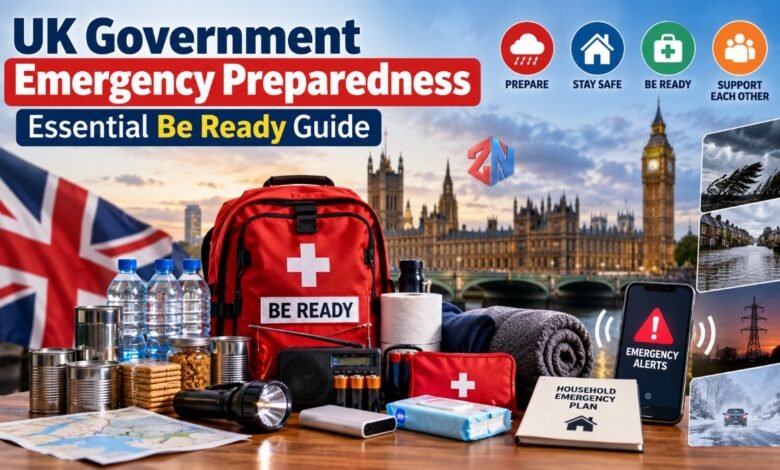
UK government emergency preparedness guidance helps households understand how to stay safe when unexpected events interrupt essential services. From severe storms and flooding to electricity failures and water shortages, preparing in advance can make difficult situations easier to manage.
In October 2026, the government introduced updated public advice through its new Be Ready campaign, encouraging households to prepare for three days of potential disruption. The guidance focuses on affordable supplies, emergency warnings, family planning and community support. This guide explains what the government recommends, how its emergency response system works and what you can do to protect your household.
What Is UK Government Emergency Preparedness?
UK government emergency preparedness refers to the policies, public guidance and practical arrangements designed to help the country anticipate, respond to and recover from emergencies.
These arrangements involve central government, local authorities, emergency services, infrastructure operators, businesses and communities. Their shared purpose is to reduce risks and maintain essential services wherever possible.
For individuals, UK emergency preparedness means understanding nearby hazards, keeping important supplies available and knowing how to respond when official warnings are issued.
The government provides two different types of information: national risk assessments for organisations responsible for emergency planning, and practical emergency planning guidance for the public.
The New Be Ready Campaign in 2026
On 22 October 2026, the Cabinet Office launched the UK government Be Ready campaign, a three-year public awareness campaign encouraging households to take manageable steps towards emergency preparedness.
The campaign updates the government’s earlier Prepare initiative, introduced in May 2024. Its main message is straightforward: preparing for three days of disruption can help households manage while emergency services prioritise those needing urgent assistance.
The advice does not require expensive equipment or extensive stockpiling. Instead, it encourages people to use existing supplies, make simple plans and build their readiness gradually.
Why Emergency Preparedness Matters in the UK
The United Kingdom faces several types of emergencies that can disrupt everyday life. Severe weather may damage electricity networks, flooding can make roads unsafe, and infrastructure failures can interrupt water supplies or communications.
The National Risk Register 2026, published on 14 July and updated in August, provides an assessment of serious national risks and their potential consequences.
It covers a broad range of hazards and threats. However, identifying possible emergencies does not mean that any particular disaster is expected to happen immediately.
Effective preparation is valuable because different incidents often create similar practical problems: limited access to electricity, drinking water, food, transport or reliable communications.
UK Government Emergency Preparedness: The Three-Day Checklist
One of the central recommendations of the Be Ready campaign is to prepare for approximately 72 hours of disruption.
This does not mean every emergency will last three days or that help will be unavailable during that period. It provides a practical starting point for households.
Essential Emergency Supplies
The following UK emergency kit checklist covers supplies the government recommends considering:
| Category | Recommended supplies |
|---|---|
| Drinking water | Three litres per person per day for three days |
| Food | Non-perishable, ready-to-eat food for three days |
| Lighting | Battery-powered or wind-up torch |
| Communication | Battery or wind-up radio and charged power bank |
| First aid | Basic first-aid equipment and essential medication |
| Hygiene | Hand sanitiser, wet wipes and personal hygiene products |
| Warmth | Blankets, warm clothing and sleeping bags |
| Documents | Important contact numbers and copies of essential records |
| Money | Some cash and payment cards |
| Additional needs | Baby products, pet supplies and necessary medical equipment |
For example, a household of four people would need 36 litres of drinking water for three days at the recommended rate of three litres per person daily. Additional water may be required for cooking, washing, medical needs or pets.
The checklist is intended to be practical rather than expensive. Families can gradually purchase missing items during normal shopping trips and review their supplies every six months.
Should You Prepare an Emergency Grab Bag?
A grab bag contains essential items that may be useful if authorities instruct residents to leave their homes.
It might include medication, identification documents, a phone charger, spare clothing and important contact details.
Keep it somewhere accessible, but remember that immediate safety comes first. During a house fire, leave without delaying your escape to collect belongings.
How to Create a Household Emergency Plan
An emergency supply kit is useful, but a clear family plan is equally important.
A household emergency plan should explain how family members will communicate, where they should meet and what actions to take if they cannot return home.
Important Steps for Families
Start by identifying safe exits and a possible meeting place. Discuss the arrangements with everyone in your household, including children who are old enough to understand them.
Next, write down emergency contacts, school telephone numbers, insurance information and details of any regular medication.
Keep a paper copy somewhere easy to find. Mobile phones may become unusable when batteries run out or communications networks are disrupted.
It is also sensible to understand where your property’s gas, electricity and water controls are located and how to use them safely when necessary.
A useful plan should cover two situations: remaining safely at home during a service interruption and leaving the property when an evacuation is required.
The government provides a printable household emergency plan through its Be Ready guidance.
How UK Government Emergency Alerts Work
The UK Emergency Alerts service warns people about serious dangers to life, including certain floods, fires and extreme weather events.
Compatible mobile devices in an affected area receive an alert transmitted through nearby mobile phone masts.
An emergency alert can produce a loud siren-like sound and vibration, even when the device is on silent.
Do You Need to Register for Emergency Alerts?
No. The government’s Emergency Alerts service is free and does not require registration or an application download.
It operates on compatible devices using UK 4G and 5G networks. Receiving an alert does not require an active mobile data connection or Wi-Fi.
When an alert arrives, read the message carefully and follow its instructions. Drivers should stop somewhere safe and legal before reading it.
The government also advises households to use other information sources because not every device can receive alerts.
Other Warning Systems Worth Knowing
Residents can also use Met Office weather warnings and relevant local flood-warning services.
In England, the Environment Agency provides free flood warnings for eligible locations. Scotland and Wales operate their own flood-warning arrangements, while Northern Ireland provides flood-risk information through its public services.
These services complement emergency alerts by helping people understand developing local conditions.
Preparing for Common Emergencies
Different emergencies require different immediate responses. Nevertheless, several precautions can reduce disruption across multiple situations.
Power Cuts and Electricity Failures
An electricity outage may affect lighting, heating, refrigeration, internet access and some telephone services.
Households should keep a torch, spare batteries, warm clothing and an alternative way to receive news.
During an outage, avoid damaged power lines and switch off potentially dangerous electrical appliances.
To report a power cut, residents in England, Scotland and Wales can use 105. In Northern Ireland, the relevant number is 03457 643643.
People who depend on electrically powered medical equipment should arrange contingency support with their healthcare providers before an outage occurs.
Flooding and Severe Storms
Flood preparedness begins with understanding whether your property is in an area at risk.
Keep important documents protected, monitor official forecasts and identify safe routes away from danger.
Never attempt to drive or walk through floodwater. If the emergency services instruct you to evacuate, follow their directions.
During severe storms, secure loose outdoor items when it is safe to do so and avoid unnecessary journeys.
Water Supply Disruptions
A water outage can affect drinking, food preparation, personal hygiene and sanitation.
Keeping bottled drinking water available reduces immediate dependence on deliveries or temporary supply arrangements.
Three litres per person per day is the current Be Ready recommendation for drinking water. Households with infants, pets or particular medical requirements may need more.
If authorities issue a warning about contaminated water, follow their specific instructions rather than assuming ordinary tap water remains safe.
Emergency Support for Vulnerable Households
Some households need additional preparation because a disruption could affect their health, mobility or ability to communicate.
The government’s guidance highlights the importance of making individual arrangements for people who rely on medical equipment, personal alarms, carers or other essential support.
What Is the Priority Services Register?
The Priority Services Register is a free service that allows eligible customers to receive additional support from energy and utility providers.
Depending on their circumstances, customers may receive priority assistance during emergencies, accessible communications or advance notification of planned interruptions where possible.
Eligibility can include people who have reached State Pension age, individuals with disabilities or long-term medical conditions, pregnant people and households with young children.
In England, Scotland and Wales, relevant utility providers operate Priority Services Registers. Northern Ireland uses Customer Care Registers for comparable arrangements.
Registration provides additional support but should not replace a personal emergency plan or arrangements for essential medical care.
How the UK Government Coordinates Emergency Responses
Emergency preparedness involves much more than encouraging households to store supplies.
The Civil Contingencies Act 2004 establishes important responsibilities for emergency planning and cooperation between designated organisations.
Local Resilience Forums bring together public services such as local authorities, emergency services and healthcare organisations, alongside relevant infrastructure providers and other partners. They operate in England and Wales, while Scotland uses Regional and Local Resilience Partnerships and Northern Ireland has Emergency Preparedness Groups.
These partnerships help assess local risks, develop coordinated emergency arrangements and improve community resilience.
At the national level, government departments assess wider risks and support planning for incidents affecting multiple regions.
The National Risk Register and the UK Government Resilience Action Plan provide part of this broader strategic picture.
Common Emergency Preparedness Mistakes to Avoid
Emergency planning is most effective when it reflects realistic household needs rather than fear.
Common mistakes include buying equipment without knowing how to use it, overlooking essential medication, keeping emergency contacts only on a phone and forgetting to replace expired supplies.
Another mistake is assuming that emergency alerts will always reach every device.
Families should also avoid depending entirely on internet-connected equipment for information. A simple battery-powered radio can provide an alternative during certain outages.
Finally, emergency supplies should never become an excuse to ignore evacuation instructions or delay contacting emergency services when someone is in immediate danger.
Simple Steps to Improve Your Emergency Readiness Today
Preparing does not need to become a complicated household project.
Begin by checking which useful items you already own. Identify any important gaps and add supplies gradually according to your budget.
Write down key contacts, check relevant warning services and discuss a meeting place with family members.
Make sure vulnerable relatives or neighbours know where to seek support. A short conversation can prevent confusion when normal communications are unavailable.
Review your arrangements every six months, or whenever your household’s circumstances change.
Conclusion
UK government emergency preparedness is about helping individuals, families and communities respond more confidently to unexpected disruption.
The 2026 Be Ready campaign reinforces practical household planning, three-day emergency supplies, official warnings and support for people with additional needs.
You do not need expensive equipment or extensive stockpiles to become better prepared. Understanding local risks, making a simple plan and keeping basic essentials available are meaningful steps towards greater household resilience.
Also Read: This Is Money: UK Finance News, Savings & Investing Guide
Frequently Asked Questions
What is the UK government emergency preparedness advice for 2026?
The government’s updated Be Ready guidance encourages households to prepare for three days of disruption, keep essential supplies available, create a family emergency plan and understand official warning systems.
Is the UK government telling everyone to prepare for three days?
The Be Ready campaign encourages households that are able to do so to prepare for three days of disruption. This is practical public safety advice, not a legal requirement or an instruction to buy a prescribed emergency kit.
Does the UK government provide free emergency kits?
The general Be Ready campaign provides guidance and checklists rather than promising free emergency kits to every household. Utility support services may offer other kinds of assistance, but registration does not guarantee a free emergency kit.
How do I receive UK government emergency alerts?
Compatible mobile phones and tablets can receive Emergency Alerts automatically through participating UK mobile networks. You do not need to register, download an app or provide your telephone number.
What should I do during an emergency in the UK?
Follow official emergency instructions, check reliable local updates and use your household emergency plan. If you or someone else is in immediate danger, call 999. Do not delay evacuation to collect emergency supplies.
Where can I find official UK emergency preparedness information?
The government’s Be Ready campaign provides household guidance, checklists and information about emergencies. GOV.UK provides Emergency Alerts information, and the National Risk Register explains wider national risks.





One Comment