

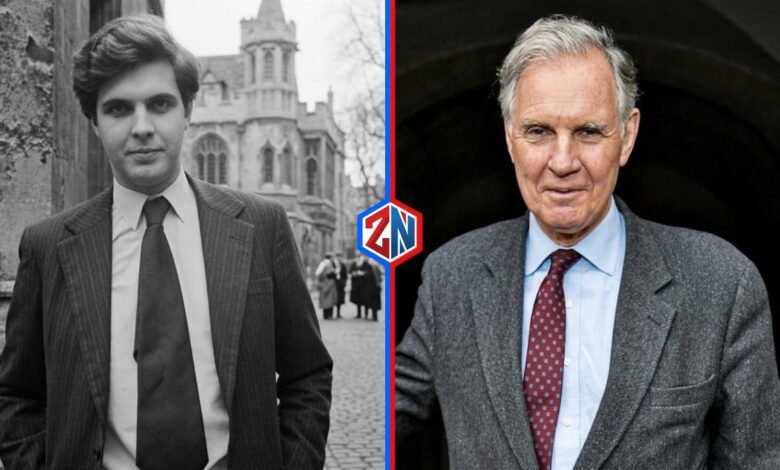
Jonathan Aitken is a British author, Anglican priest and former Conservative politician whose public life has moved through politics, journalism, prison, theology and prison ministry. Once a Cabinet minister in John Major’s government, his political career ended after a libel case led to criminal charges for perjury. Years later, he entered ordained ministry and became involved in prison chaplaincy and rehabilitation work.
His story attracts interest because it includes unusually different stages: an early career in journalism and business, more than two decades in Parliament, a dramatic fall from political office, imprisonment, theological study and a later role as a priest. Here is a fact-checked look at his life and career.
Jonathan Aitken Quick Bio
| Detail | Information |
|---|---|
| Full Name | Jonathan William Patrick Aitken |
| Born | 30 August 1942 |
| Birthplace | Dublin, Ireland |
| Age | 84, as of October 2026 |
| Profession | Author, Anglican priest, former politician and journalist |
| Political Career | Conservative MP from 1974 to 1997 |
| Major Government Roles | Minister of State for Defence Procurement; Chief Secretary to the Treasury |
| Education | Eton College, Christ Church Oxford, Wycliffe Hall Oxford |
| Former Wife | Lolicia Aitken-Azucki |
| Second Wife | Elizabeth Harris Aitken, who died in 2022 |
| Children | Four |
| Known For | Politics, perjury case, imprisonment, writing and later Christian ministry |
| Current Public Work | Priest, prison chaplaincy and prison-reform work |
His official biography confirms his parliamentary career, theological studies and current work, while UK Parliament records verify his Commons service and ministerial appointments.
Who Is Jonathan Aitken?
Jonathan William Patrick Aitken was born in Dublin on 30 August 1942. He came from a family with strong links to British public life. His father, Sir William Aitken, was also a Conservative MP, while his mother was Penelope, Lady Aitken. His sister, Maria Aitken, became an actress and director.
Aitken studied at Eton College before reading law at Christ Church, Oxford. His later education took a very different direction when, after his political career and imprisonment, he studied theology at Wycliffe Hall, Oxford. His official biography states that he studied there from 2000 to 2002 and graduated with distinction.
These two periods of education reflect the very different phases of his life: law and politics in his younger years, followed decades later by theology and Christian ministry.
Jonathan Aitken’s Early Journalism and Business Career
Before becoming an MP, Aitken worked as a journalist. After graduating from Oxford in 1964, he joined the London Evening Standard and worked as a reporter and foreign correspondent. His assignments included reporting connected with Vietnam, Biafra and the Middle East.
He later moved into business. According to his published career history, he worked with Slater Walker and subsequently helped establish Aitken Hume International, a merchant bank in the City of London. He also held several company directorships before resigning them when he entered government in 1992.
That mix of journalism, international affairs and business gave Aitken a broad public profile before he reached ministerial office.
Jonathan Aitken’s Political Career
Jonathan Aitken entered the House of Commons in February 1974 as Conservative MP for Thanet East. When constituency boundaries and names changed, he represented South Thanet from 1983 until 1997. In total, his parliamentary service lasted a little over 23 years.
For much of that period he remained on the backbenches. His move into government came under Prime Minister John Major.
Aitken served as Minister of State for Defence Procurement from April 1992 until July 1994. He was then appointed Chief Secretary to the Treasury, serving from July 1994 until July 1995. UK Parliament’s official records confirm both appointments.
The Treasury position placed him in the Cabinet and represented the high point of his government career. However, events beginning in the mid-1990s would soon bring his political rise to an end.
Why Did Jonathan Aitken Go to Prison?
The part of the Jonathan Aitken biography most frequently searched is the court case that resulted in his imprisonment.
The controversy developed after allegations concerning who had paid a hotel bill during a 1993 stay at the Ritz in Paris, when Aitken was serving as a defence procurement minister. Aitken challenged reporting about the matter through a libel action. That case later collapsed after evidence undermined his account.
The consequences went beyond losing a civil case. Aitken was subsequently prosecuted after having given false evidence under oath.
In June 1999, at London’s Old Bailey, he was sentenced to 18 months in prison after admitting perjury and perverting the course of justice. Contemporary reporting recorded that the two 18-month sentences were ordered to run concurrently.
Aitken’s own official biography now describes the episode directly, stating that his political career ended after he told a lie on oath during the libel proceedings. He ultimately served seven months in prison before being released in January 2000.
The conviction permanently changed the direction of his public life.
How Prison Changed Jonathan Aitken’s Career
After his release, Aitken did not return to the senior political career he had once pursued. Instead, religion, writing and criminal-justice issues became increasingly important parts of his public work.
His interest in Christianity had developed around the period of his legal and personal difficulties and continued during his imprisonment. He later studied theology at Wycliffe Hall, Oxford, from 2000 to 2002.
Aitken subsequently became involved in Christian organisations and prison-reform initiatives. His experience gave him the unusual perspective of having been both a senior government figure and a prisoner within the criminal-justice system.
That experience later became central to his writing, public speaking and work with offenders.
From Former Prisoner to Anglican Priest
One of the most notable later chapters of Jonathan Aitken‘s life came when he entered ordained ministry.
On 30 June 2018, Aitken was ordained as a Church of England deacon at St Paul’s Cathedral. Contemporary reporting noted that he intended to focus part of his ministry on prison chaplaincy.
Exactly one year later, on 30 June 2019, he was ordained to the priesthood. Records from St Matthew’s Westminster state that the ceremony took place at St Mary’s, Stoke Newington.
His current official biography describes him as a priest and part-time prison chaplain at HMP Pentonville. Friends of Pentonville also identifies him as a voluntary prison chaplain there.
The Diocese of London reported in 2023 that Aitken had been given Permission to Officiate, a formal status allowing clergy to conduct ministry within the diocese under the relevant church arrangements.
Jonathan Aitken’s Work in Prison Reform
Aitken’s connection with prisons extends beyond chaplaincy.
His public biography describes him as a campaigner for prison reform and offender rehabilitation. He has also been connected with charities and organisations working with prisoners and former offenders.
In 2007, he was appointed to chair a Centre for Social Justice policy group examining prison reform. A later report associated with his work focused particularly on rehabilitation and mentoring for former prisoners.
This area of his career is significant because it links his own imprisonment with practical work involving people inside the criminal-justice system.
Jonathan Aitken as an Author
Writing has remained a major part of Aitken’s career across several decades.
His books cover politics, biography, autobiography, religion and prison experience. Among his best-known works are Nixon: A Life, a biography of former US president Richard Nixon, and Margaret Thatcher: Power and Personality. He has also written about the Christian clergyman and hymn writer John Newton.
Aitken addressed his own political downfall in autobiographical works including Pride and Perjury and later Porridge and Passion. More recent religious writing includes Doing Time: A Spiritual Survival Guide, co-authored with Edward Smyth and published in 2021.
His writing therefore provides another link between the different stages of his career rather than focusing only on his years in Westminster.
Jonathan Aitken’s Wife and Children
Aitken has four children. His official website names them as Alexandra, Victoria, William and Petra. He was previously married to Lolicia Aitken-Azucki.
In 2003 he married Elizabeth Harris Aitken. She had previously been married to actors Richard Harris and Rex Harrison. Elizabeth remained married to Jonathan Aitken until her death on 15 April 2022 after a long illness.
The couple were associated with St Matthew’s Westminster, the church where Aitken also served following his entry into ordained ministry.
What Is Jonathan Aitken Doing Now?
As of the latest publicly available information, Jonathan Aitken remains active primarily through Christian ministry, prison chaplaincy, writing, speaking and prison-reform work rather than elected politics.
His official website continues to describe him as a priest and part-time chaplain at HMP Pentonville, while an organisation supporting Pentonville prisoners describes his role as voluntary prison chaplain.
At 84 in 2026, his public career has therefore lasted more than six decades, beginning with journalism in the 1960s and later moving through business, Parliament, government, imprisonment, theology and ministry.
Why Jonathan Aitken’s Story Remains of Interest
Jonathan Aitken’s public record contains several sharply contrasting chapters. He reached Cabinet rank after more than two decades in Parliament but later received a criminal conviction arising from false evidence given during a libel action. He then studied theology and eventually returned to prisons in an entirely different role—as a chaplain.
These events are also why a complete biography cannot be reduced either to his political career or to his conviction. Journalism, government, imprisonment, books, faith and rehabilitation work are all important to understanding how his public role changed over time.
Also Read: Rowan Atkinson Net Worth in 2026: How Mr Bean Built His Estimated $150 Million Fortune
FAQ
How old is Jonathan Aitken?
Jonathan Aitken was born on 30 August 1942 in Dublin. He turned 84 in August 2026.
Why was Jonathan Aitken sent to prison?
Jonathan Aitken was sentenced to 18 months in prison in June 1999 after admitting perjury and perverting the course of justice connected with false evidence in his earlier libel case. He served seven months before being released in January 2000.
Was Jonathan Aitken a Cabinet minister?
Yes. He served as Minister of State for Defence Procurement from 1992 to 1994 and as Chief Secretary to the Treasury from 1994 to 1995 during John Major’s government.
Is Jonathan Aitken a priest?
Yes. Aitken became a deacon in 2018 and was ordained to the Anglican priesthood on 30 June 2019. His official website currently describes him as a priest and part-time prison chaplain at HMP Pentonville.
Who was Jonathan Aitken’s wife?
Jonathan Aitken married Elizabeth Harris in 2003. They remained married until her death on 15 April 2022. He had previously been married to Lolicia Aitken-Azucki.
What books has Jonathan Aitken written?
His books and co-authored works include Nixon: A Life, Margaret Thatcher: Power and Personality, Pride and Perjury, Porridge and Passion, and Doing Time: A Spiritual Survival Guide, among other political, biographical and religious works.





2 Comments